
“Learning How to improve website traffic organically is one of the most effective ways to build a sustainable online presence.
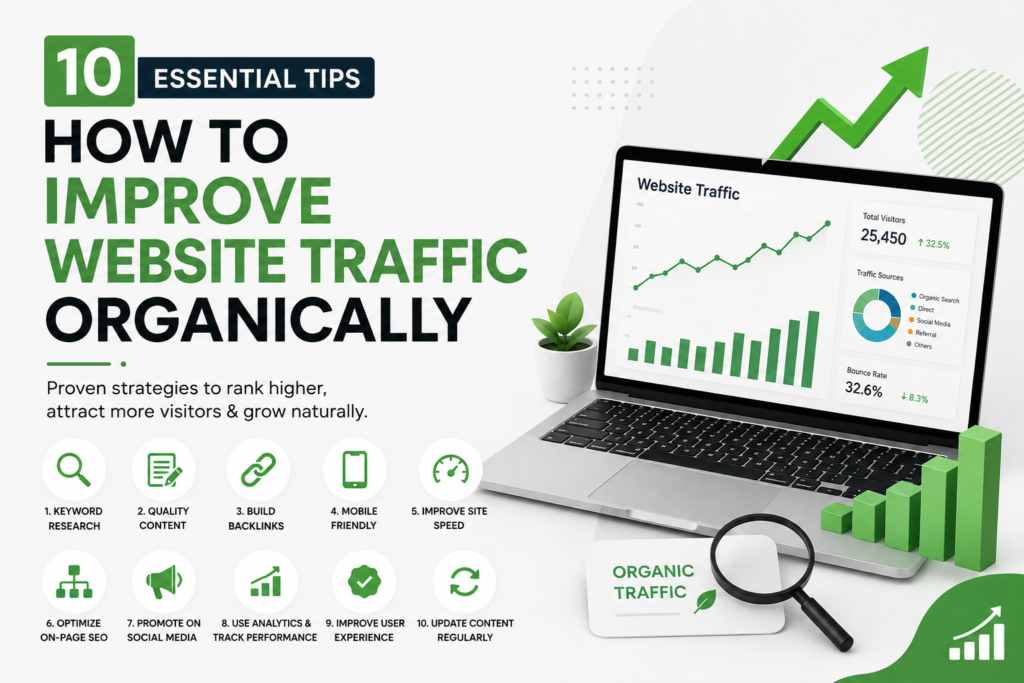
Organic website traffic is one of the most valuable sources of visitors for any business. Unlike paid advertising, organic traffic comes from search engines such as Google without paying for every click. A strong organic traffic strategy can help businesses increase visibility, attract potential customers, build trust, and generate long-term results.
Improving website traffic organically requires a combination of SEO, quality content, technical improvements, keyword research, backlinks, and user experience. In this blog, we will explore effective ways to increase your website traffic naturally.
How to Improve Website Traffic Organically
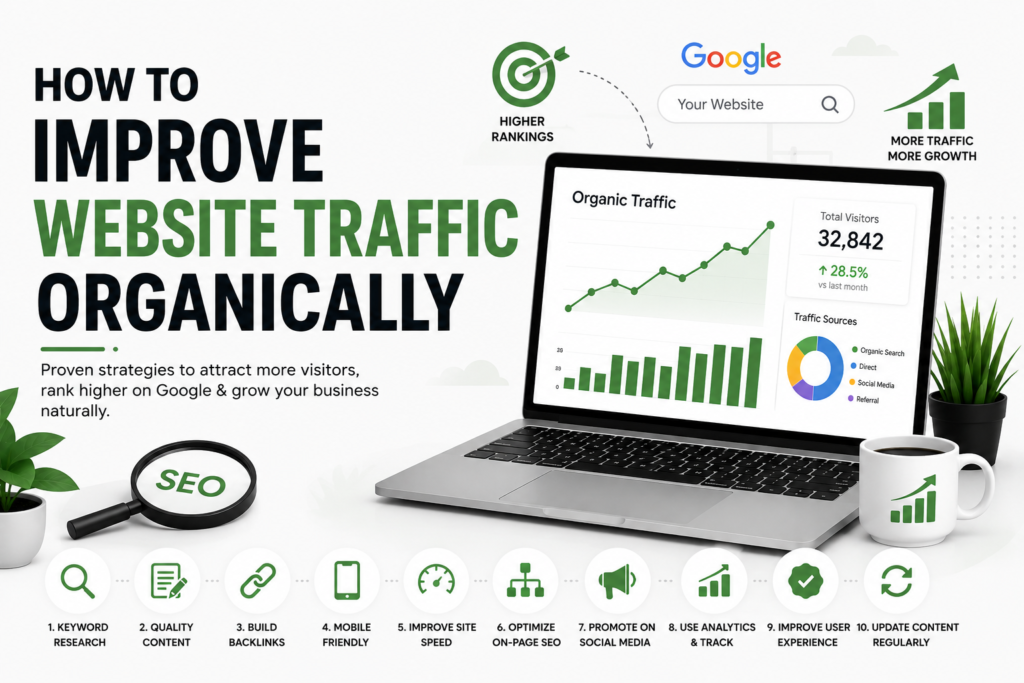
Focus on Keyword Research
Effective SEO begins with choosing the right keywords.. Keywords are the words and phrases people type into search engines when looking for information, products, or services.
Choose keywords that are relevant to your business and match what your target audience is searching for. Instead of focusing only on highly competitive keywords, consider using long-tail keywords They are more targeted and usually face less competition.
For example, instead of using a broad keyword like “digital marketing,” focus on a more targeted phrase such as “digital marketing services for small businesses.”
Use your target keywords naturally in your page title, headings, content, URL, meta description, and image alt text. Avoid keyword stuffing because it can make your content difficult to read and may negatively affect your SEO.
Create High-Quality Content
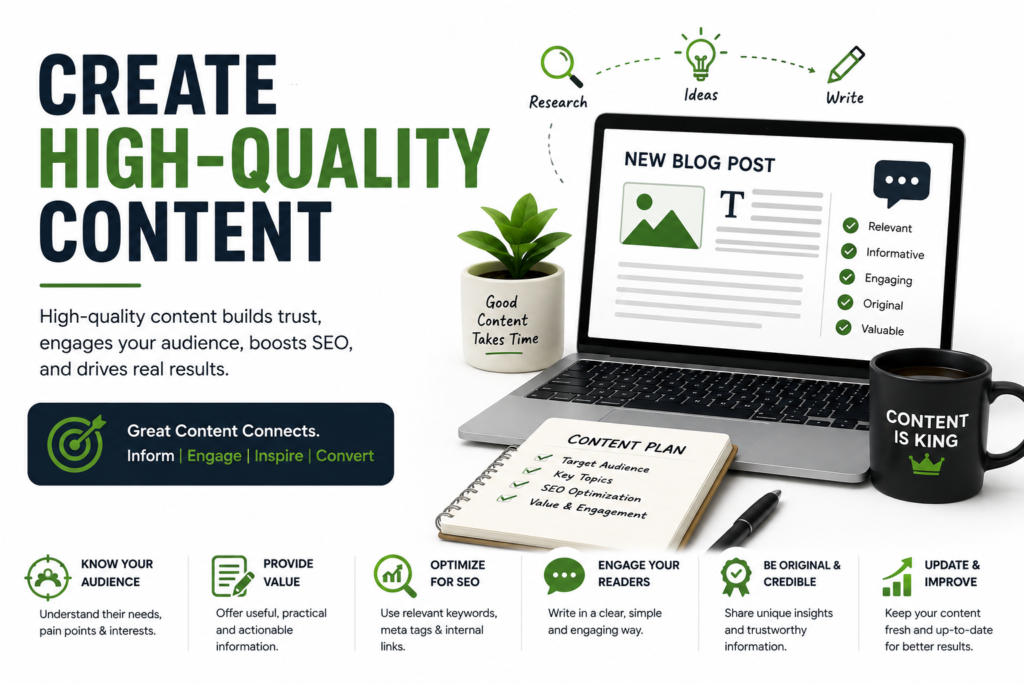
High-quality content is essential for attracting organic visitors to your website. Search engines prefer useful, original, and relevant content that satisfies the user’s search intent.
Create blog posts, guides, tutorials, FAQs, case studies, and informative articles that answer the questions your audience is asking.
For example, if you provide SEO services, you could create content such as:
What is SEO?
How to improve Google rankings
Common SEO mistakes
Beginner’s guide to keyword research
How backlinks help SEO
Try to provide useful information instead of simply promoting your services. Valuable content encourages people to spend more time on your website and increases the chances of earning backlinks and shares.
Optimize Your Website for SEO
On-page SEO helps search engines better understand your website and the information it provides. Make sure every important page has a clear and descriptive title and meta description.
Organize your content with clear heading levels, including H1, H2, and H3, to make it easier to read and navigate. Include relevant keywords naturally throughout the page.
You should also optimize your URLs. A short and descriptive URL is easier for users and search engines to understand.
For example:
Poor URL:
website.com/page123?id=45
Better URL:
website.com/organic-website-traffic
Optimizing images, internal links, headings, and page content can also improve your website’s overall SEO performance.
Improve Website Speed
Website speed has a major impact on user experience. Slow-loading websites can cause visitors to leave before they have a chance to explore the content.
Compress large images, reduce unnecessary scripts, use efficient website hosting, and keep your website’s design optimized for performance.
A fast website provides a better experience for visitors and can support better search performance. Regularly test your website on both desktop and mobile devices to identify performance problems.
Make Your Website Mobile-Friendly
A large number of people browse the internet using smartphones. Therefore, your website needs to work properly on different screen sizes.
A mobile-friendly website should have readable text, easy navigation, properly sized buttons, and content that fits the screen without requiring users to zoom or scroll horizontally.
Responsive web design allows your website to automatically adjust to different devices. Providing a smooth mobile experience can help keep visitors engaged.
Build Strong Internal Links
Internal linking means linking one page of your website to another relevant page. It helps visitors discover more content and allows search engines to understand the structure of your website.
For example, if you have a blog about SEO, you can link to another article about keyword research or technical SEO.
Internal links can also help distribute authority between pages and encourage visitors to spend more time exploring your website.
Earn Quality Backlinks
Backlinks are links from other websites pointing to your website. When trustworthy and relevant websites link to your content, it can improve your website’s authority and SEO potential.
Instead of trying to get hundreds of low-quality backlinks, focus on earning links from relevant and reputable websites.
You can earn backlinks by creating original research, useful guides, infographics, expert articles, and valuable resources. Guest posting on relevant websites can also be part of a carefully managed link-building strategy.
Quality matters more than quantity when building backlinks.
Optimize for Local SEO
If your business serves customers in a specific location, local SEO can help you attract nearby visitors.
Create and optimize your Google Business Profile with accurate business information, working hours, contact details, services, and photos.Ask happy customers to share honest reviews about their experience.
You can also create location-specific website content. For example, a digital marketer in Malappuram could create content around “digital marketing services in Malappuram.”
Local SEO helps businesses become more visible when people search for products or services in their area.
Update Old Content
Creating new content is important, but updating existing content can also bring valuable results. Information, statistics, trends, and search behavior change over time.
Review your older blog posts and update outdated information. Add new examples, improve headings, update links, and include relevant keywords where appropriate.
You can also combine short or similar articles into a more comprehensive resource. Keeping your content fresh can make it more useful for both visitors and search engines.
Use Social Media to Promote Content
Social media may not directly replace SEO, but it can help boost the reach and visibility of your content.Share your blog posts, videos, guides, and other useful resources on platforms where your target audience is active.
Create attractive captions and visuals that encourage people to visit your website.
For example, you can turn a detailed blog post into several Instagram posts, LinkedIn updates, short videos, or social media graphics. This allows you to reach different