
Technical SEO basics is the backbone of a successful website, ensuring optimal performance and search engine visibility.
It helps search engines crawl, index, and understand your content while providing visitors with a fast, secure, and mobile-friendly experience.
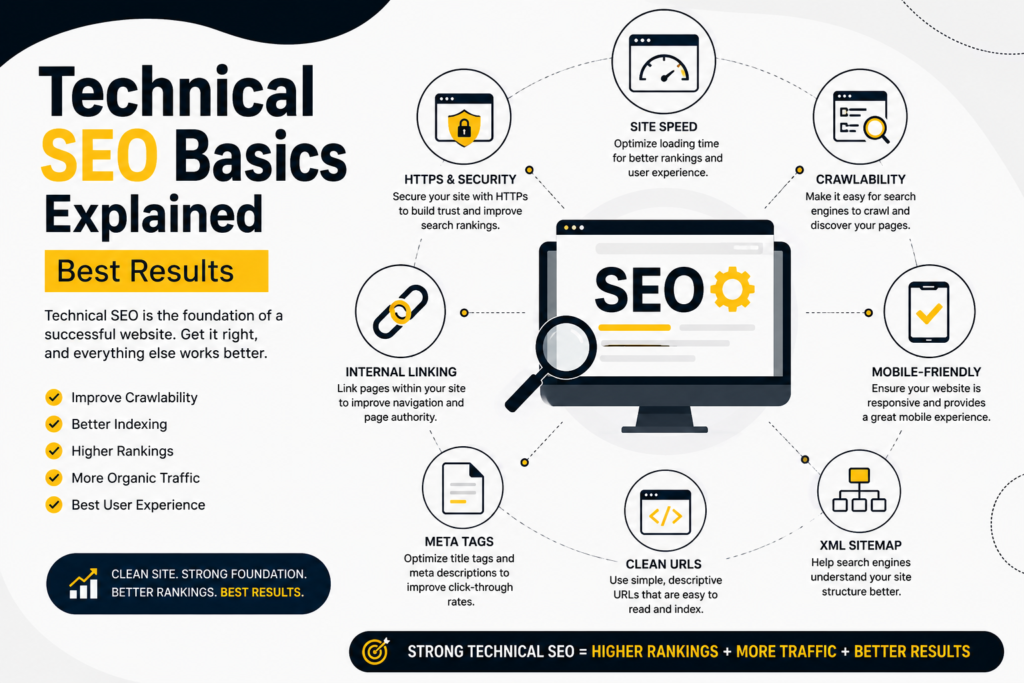
By improving website speed, fixing technical issues, and optimizing site structure, businesses can increase organic traffic and achieve long-term online success.
1.What is Technical SEO?
Technical SEO is the process of optimizing a website’s technical elements to improve its
visibility in search engines. It focuses on website speed, mobile responsiveness, security,
site structure, and crawlability. Unlike on-page SEO, which focuses on content and
keywords, technical SEO works behind the scenes to improve website perf.“Consistently monitoring your site ensures sustainable search engine growth.”
Why Technical SEO Basics Matter for Your Website
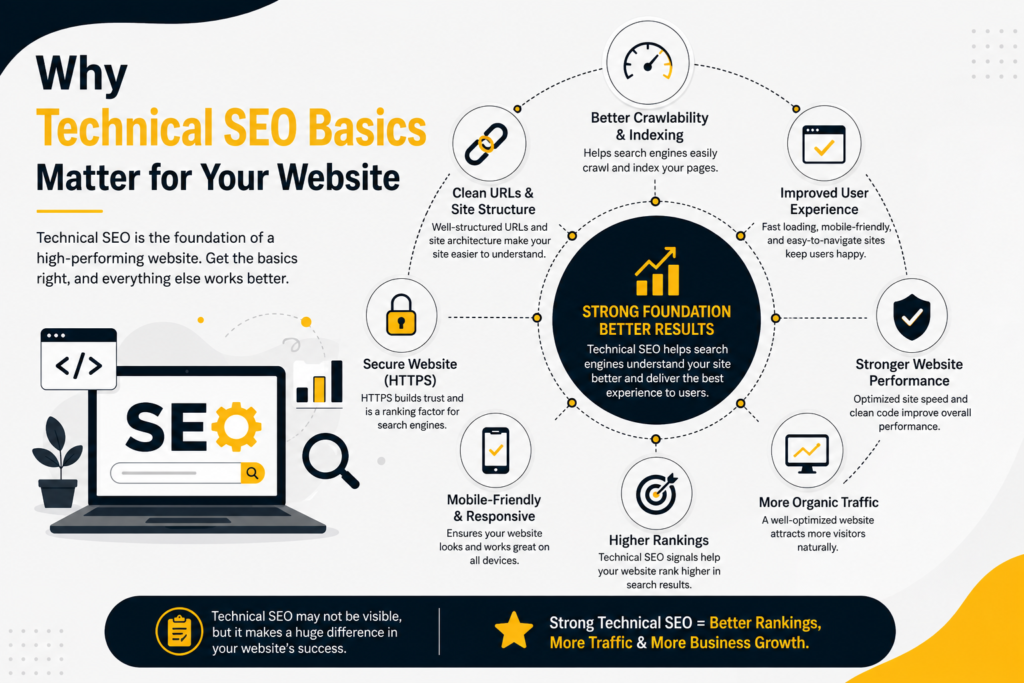
Technical SEO helps search engines understand your website while improving the user
experience. A technically optimized website can lead to better rankings, increased organic
traffic, and improved website performance.
Some key benefits include:
- Better search engine rankings
- Faster website loading speed
- Improved user experience
- Higher organic traffic
- Better mobile performance
- Increased website security
3.Website Crawling and Indexing
Search engines use automated bots to crawl websites and index their pages efficiently. If
important pages cannot be crawled or indexed, they may not appear in search results.
Keeping your website organized and fixing crawl issues helps improve visibility.
- Compressing images
- Minifying CSS and JavaScript
- Using browser caching
- Choosing reliable web hosting
A fast website improves both user experience and SEO performance.
Improve Website Speed
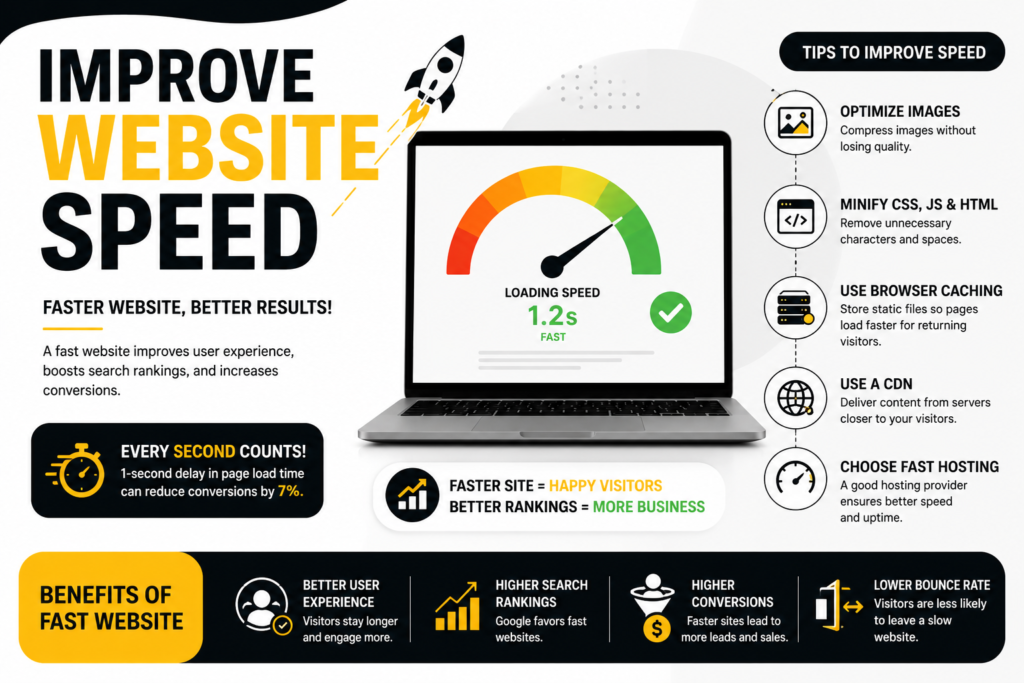
Website speed is an important ranking factor. Slow websites often lose visitors and increase
bounce rates.
You can improve speed by:
Mobile-Friendly Design
Most users browse the internet on mobile devices, making responsive design essential. A
mobile-friendly website should have:
- Responsive layouts
- Easy navigation
- Readable text
- Fast loading pages
A better mobile experience keeps users engaged and supports higher search rankings.
Secure Your Website
Using HTTPS protects user information and builds trust. Installing an SSL certificate
improves website security and is also considered a positive ranking signal by search
engines.
7.XML Sitemap and Robots.txt
An XML sitemap helps search engines discover your important pages, while the robots.txt
file controls which pages search engine bots can access. Both help improve crawling and
indexing.
Optimize Website Structure
A clear website structure makes navigation easier for users and search engines.
Best practices include:
- Simple URL structure
- Clear navigation menus
- Internal linking
- Organized categories
A well-structured website improves usability and search engine crawling.
Fix Broken Links
Broken links can reduce user satisfaction and make it harder for search engines to crawl
your website. Regularly checking and fixing broken links helps maintain a healthy website
and improves SEO performance.
Structured Data
Structured data helps search engines better understand your content. It can display rich
search results such as FAQs, reviews, product details, and ratings, improving visibility and
click-through rates.
Core Web Vitals
Core Web Vitals help measure user experience by analyzing website speed,
responsiveness, and visual stability. Improving these metrics creates a better user
experience and supports stronger search rankings.
Common Technical SEO Mistakes
Some common mistakes include:Slow website speed
Broken links
Duplicate content
Poor mobile optimization
Missing XML sitemapUsing HTTP instead of HTTPS
Avoiding these issues helps improve your website’s technical healt.
Conclusion
Technical SEO is the backbone of a successful website, ensuring optimal performance and
search engine visibility. It helps search engines crawl, index, and understand your content
while providing visitors with a fast, secure, and mobile-friendly experience. By improving
website speed, fixing technical issues, optimizing site structure, and following SEO best
practices, businesses can increase organic traffic, improve search rankings, and achieve
long-term online success.