
In today’s competitive online world, having a great product or service is not enough. People need to know your brand, recognize it, remember it, and trust it before they decide to become customers. This is where digital marketing plays an important role. It gives businesses powerful ways to introduce their brand to new audiences, communicate with potential customers, and build long-te
Brand awareness refers to how familiar people are with a business and how easily they can recognize or remember its products, services, values, or identity. A strong digital marketing strategy can increase brand awareness by placing your business in front of the right people through search engines, social media, websites, online advertising, content, email, and other digital channels.
Whether you are a small local business, startup, freelancer, or established company, digital marketing can help you become more visible and memorable online. Let’s explore how digital marketing builds brand awareness and why it matters for business growth.
What Is Brand Awareness?
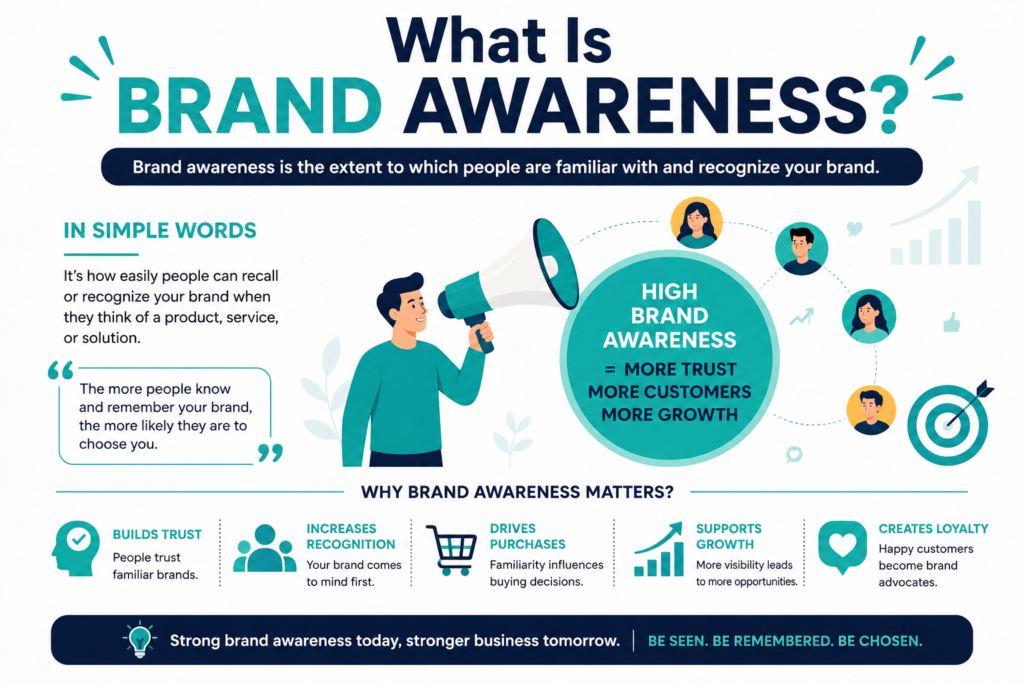
Brand awareness is the level of recognition and familiarity customers have with a brand. When people see your logo, business name, colors, social media posts, or products and immediately know what your business represents, you have achieved a certain level of brand awareness.
For example, when customers repeatedly see a company appearing in Google search results, social media feeds, videos, blogs, or online advertisements, they gradually become familiar with that brand. Even if they do not purchase immediately, repeated exposure can make the business easier to remember when they eventually need a related product or service.
Brand awareness is therefore not only about getting customers to buy. It is also about creating recognition, trust, familiarity, and a positive impression over time.
1. Digital Marketing Helps You Reach a Wider Audience
Traditional marketing can be limited by location, budget, and distribution. Digital marketing allows businesses to reach people across different locations and audience groups through online platforms.
A business can use search engines, social media, websites, video platforms, and digital advertising to introduce its brand to thousands of potential customers. With the right targeting strategy, businesses can focus on people who are more likely to be interested in their products or services.
This wider reach is especially useful for small businesses that want to compete with larger brands. Instead of depending only on local visibility, businesses can build an audience beyond their immediate area.
2. Social Media Increases Brand Visibility
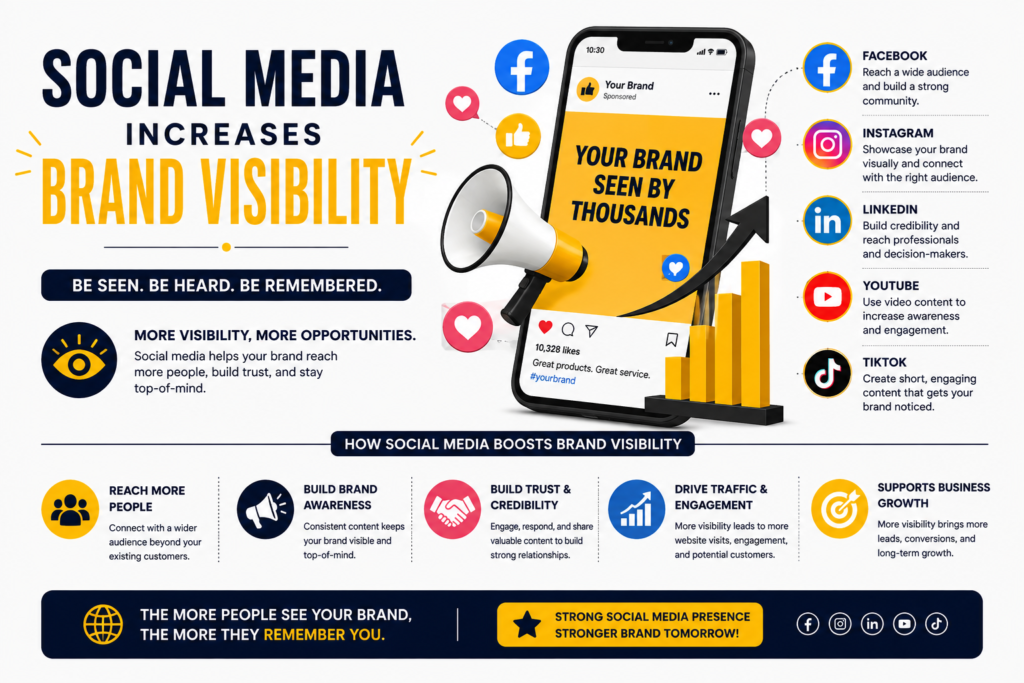
Social media is one of the most effective channels for increasing brand awareness. Platforms such as Instagram, Facebook, LinkedIn, and other social networks allow businesses to communicate directly with their target audience.
Regularly sharing useful and engaging content can help your brand remain visible in customers’ feeds. Businesses can publish educational posts, short videos, customer stories, product information, behind-the-scenes content, tips, and industry updates.
Consistency is important. A brand that posts valuable content regularly has more opportunities to be noticed and remembered.
Social media also encourages interaction. Likes, comments, shares, saves, and direct messages can create meaningful connections between brands and their audiences.
3. SEO Helps People Discover Your Brand
Search Engine Optimization (SEO) improves a website’s visibility in search engine results. When people search for information, products, or services related to your business, appearing on the first page can significantly increase brand exposure.
For example, a digital marketing agency can create content around topics such as SEO services, social media marketing, Google Ads, and website optimization. When users search for these topics, helpful content can introduce them to the brand.
SEO is especially valuable because users are already searching for information. By targeting relevant keywords and creating useful content, businesses can attract people who have an existing interest in their industry.
Over time, consistent search visibility can make a brand more familiar and credible.
4. Content Marketing Builds Trust
Content marketing focuses on creating and sharing valuable information that helps your target audience. Instead of constantly promoting products, businesses can educate, inform, entertain, and solve problems.
Blog articles, guides, videos, infographics, social media posts, case studies, and tutorials are examples of content that can increase brand awareness.
Suppose a customer is trying to learn how to improve website traffic. A digital marketing company that publishes a detailed guide on the topic can become a useful source of information. Even if the visitor does not become a customer immediately, the brand may remain in their memory.
High-quality content can position a business as knowledgeable and trustworthy within its industry.
5. Google Ads Can Create Immediate Brand Exposure
Paid advertising is another effective way to increase brand awareness. Google Ads can place businesses in front of users when they search for relevant products, services, or information.
Unlike organic SEO, which may require time to build results, paid search advertising can provide visibility much faster. Businesses can choose relevant keywords, create compelling advertisements, and direct users to optimized landing pages.
Display advertising can also introduce brands to people while they browse websites, read articles, or use online services.
Even when users do not click an advertisement, seeing the brand name repeatedly can contribute to familiarity.
6. Meta Ads Help Businesses Reach Specific Audiences
Meta advertising can help businesses promote their brands across platforms such as Facebook and Instagram. One of its major advantages is audience targeting.
Businesses can create campaigns based on factors such as interests, demographics, behaviors, and previous interactions. This allows brands to show relevant advertisements to audiences who are more likely to be interested in what they offer.
Creative visuals, short videos, promotional messages, testimonials, and educational content can all be used to increase brand recognition.
A consistent advertising message across multiple campaigns can help customers remember the business more easily.
7. Video Marketing Makes Brands More Memorable
Video content has become an important part of digital marketing because it combines visuals, sound, storytelling, and emotion.
Businesses can use videos to explain products, demonstrate services, answer common questions, share customer experiences, or tell their brand story.
Short-form videos can be particularly useful for attracting attention on social media. Longer educational videos can provide deeper information and establish expertise.
A recognizable visual style, consistent messaging, and memorable storytelling can help audiences associate specific ideas and experiences with a brand.
8. Influencer and Creator Marketing Expands Reach
Collaborating with relevant influencers or content creators can expose a brand to an established audience. When a creator introduces a product or service to their followers, the brand can benefit from the creator’s reach and relationship with their audience.
The most effective partnerships are usually based on relevance rather than follower count alone. A creator whose audience matches your target customers may generate stronger brand awareness than someone with a much larger but unrelated audience.
Authentic recommendations and useful demonstrations can make a brand feel more relatable.
9. Email Marketing Keeps Your Brand Connected
Email marketing helps businesses maintain communication with people who have already shown interest in their brand.
Businesses can send newsletters, educational content, product updates, special offers, announcements, and helpful resources. Regular but valuable communication keeps the brand familiar without overwhelming subscribers.
Email is also useful for building relationships. Instead of communicating only when a sale is available, brands can provide useful information that keeps customers engaged.
Over time, this consistent communication can strengthen brand recall and customer loyalty.
10. A Strong Website Creates a Professional Brand Image
Your website is often one of the first places people visit after discovering your business. A professional, easy-to-use website can create a positive first impression.
Your website should clearly communicate who you are, what you offer, why customers should choose you, and how they can contact you.
Important elements include clear navigation, fast loading speed, mobile responsiveness, engaging content, strong visuals, clear calls to action, and consistent branding.
A website that looks professional and provides a smooth user experience can strengthen customer confidence.
11. Consistent Branding Improves Recognition
Consistency is essential for building strong brand awareness. Your logo, colors, fonts, images, tone of voice, and messaging should have a recognizable identity across digital platforms.
When customers see the same visual style and communication approach on your website, social media profiles, advertisements, and emails, they can identify your brand more easily.
Consistency does not mean posting the same content everywhere. It means maintaining a clear identity while adapting content to each platform.
A recognizable brand is easier for customers to remember.
12. Customer Reviews Strengthen Brand Credibility
Online reviews and testimonials can have a major influence on how people perceive a business. Positive customer experiences can help new audiences feel more confident about choosing a brand.
Businesses can encourage satisfied customers to share honest feedback on appropriate platforms. Testimonials can also be displayed on websites, social media pages, and marketing materials where relevant.
Reviews provide social proof and show potential customers that other people have interacted with the business.
However, businesses should focus on delivering excellent customer experiences rather than simply collecting reviews. Genuine positive feedback is more valuable than artificial promotion.
13. Remarketing Keeps Your Brand in Front of Potential Customers
Not everyone who visits a website is ready to purchase immediately. Remarketing allows businesses to reconnect with people who have previously interacted with their website, advertisements, or online content, where appropriate and subject to platform privacy rules.
For example, someone may visit a service page but leave without making contact. A later advertisement can remind them about the business.
This repeated exposure can increase brand recall and encourage potential customers to return when they are ready to make a decision.
14. Analytics Helps Improve Brand Awareness Campaigns
Digital marketing provides measurable data that can help businesses understand how audiences interact with their brand.
Businesses can track website traffic, impressions, engagement, clicks, video views, search visibility, conversions, and other relevant metrics.
This information helps marketers identify which channels and content formats are performing well.
For example, if short videos generate more engagement than static posts, a business may decide to create more video content. If certain blog topics attract significant organic traffic, the business can develop related content.
Using data allows businesses to continuously improve their brand awareness strategy.
15. Personalization Creates Stronger Connections
Customers are more likely to engage with content that feels relevant to their needs and interests. Digital marketing allows businesses to create more personalized experiences through audience segmentation and targeted content.
For example, a business can create different messages for new visitors, existing customers, or people interested in specific services.
Personalization can make communication more meaningful and help customers feel that the brand understands their needs.
However, personalization should always respect customer privacy and applicable data protection requirements.
Why Brand Awareness Matters for Long-Term Growth
Brand awareness does not always produce immediate sales, but it plays an important role in the customer journey. People often prefer businesses they recognize and trust.
When customers repeatedly encounter a brand through useful content, search results, social media, advertisements, and positive experiences, that brand can become more familiar.
Strong awareness can lead to:
- Greater brand recognition
- Increased website visits
- More social media engagement
- Higher customer trust
- More opportunities for leads
- Better customer recall
- Stronger brand loyalty
- Increased chances of repeat purchases
The goal is not simply to make your brand visible everywhere. The goal is to become visible in the right places, to the right audience, with the right message.
How to Build a Successful Brand Awareness Strategy
A successful strategy starts with understanding your target audience. Identify their needs, interests, challenges, online behavior, and search habits.
Next, establish clear brand messaging. Decide what your brand stands for and what makes it different from competitors.
Choose digital channels that match your audience. You may not need to be active on every platform. Focus on the channels where your potential customers spend time.
Create valuable content consistently and maintain a recognizable visual identity. Combine organic strategies such as SEO and content marketing with paid strategies such as Google Ads and Meta Ads when appropriate.
Finally, monitor your results. Use data to understand what is working and make improvements over time.
Conclusion
Digital marketing builds brand awareness by helping businesses become visible, recognizable, trustworthy, and memorable online. From SEO and social media to content marketing, paid advertising, email campaigns, video, and professional websites, every digital channel can contribute to stronger brand recognition when used strategically.
The most successful brands do not rely on one campaign or one platform. They build awareness through consistent communication, valuable content, strong customer experiences, and continuous optimization.
If your goal is to grow your business, attracting customers is only one part of the journey. First, people need to discover your brand. Then they need to understand it, trust it, and remember it. A well-planned digital marketing strategy can help you achieve all of these stages and create a stronger foundation for long-term business growth.