
Organic website traffic is a valuable way for businesses to attract relevant visitors without relying on paid advertising. Unlike paid advertising, organic traffic comes from search engines, social platforms, referrals, and other unpaid sources. When people discover your website naturally, they are often more interested in your products, services, or information.
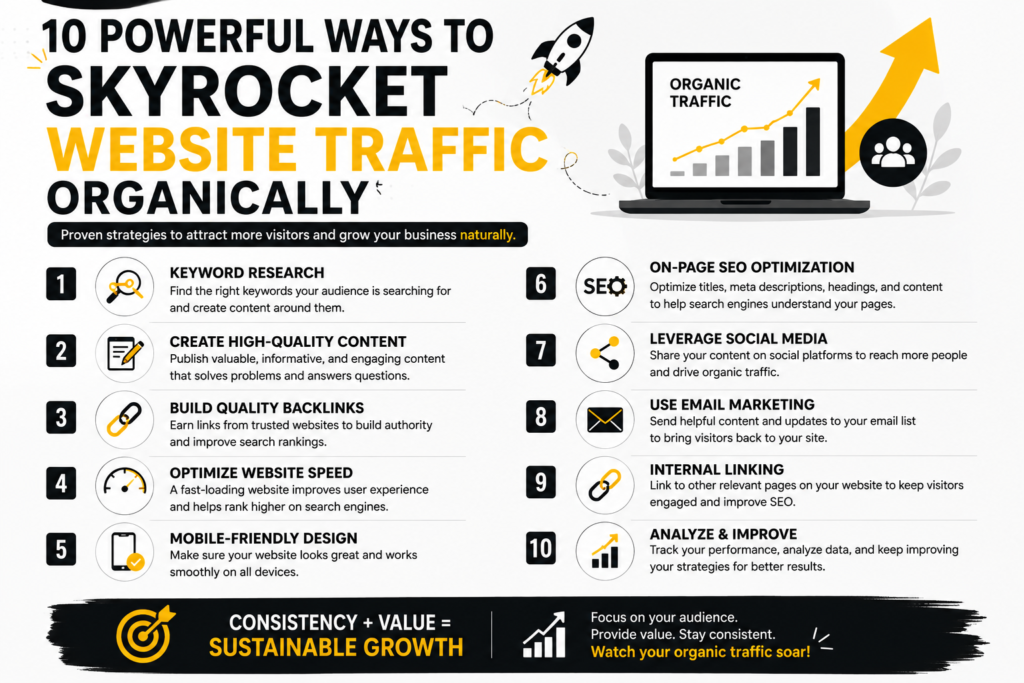
However, increasing organic traffic does not happen overnight. It requires quality content, proper SEO, a user-friendly website, and consistent effort. In this guide, you will learn practical strategies to improve website traffic organically and build a stronger online presence.
What Is Organic Website Traffic?
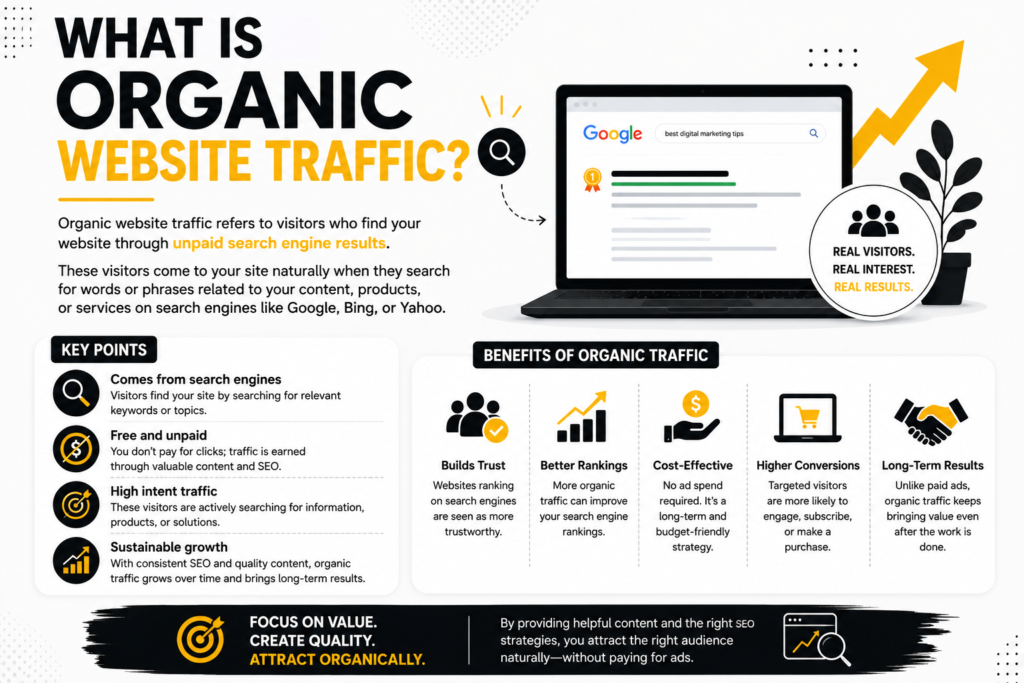
Organic website traffic refers to visitors who reach your website without clicking on a paid advertisement. Search engines such as Google display your website in their unpaid search results when your content matches what users are searching for.
For example, if someone searches for “best digital marketing services for small businesses” and visits your website from the regular search results, that visit is considered organic traffic.
Organic traffic is important because it can provide long-term results. A well-optimized page can continue attracting visitors for months or even years.
1. Focus on the Right Keywords
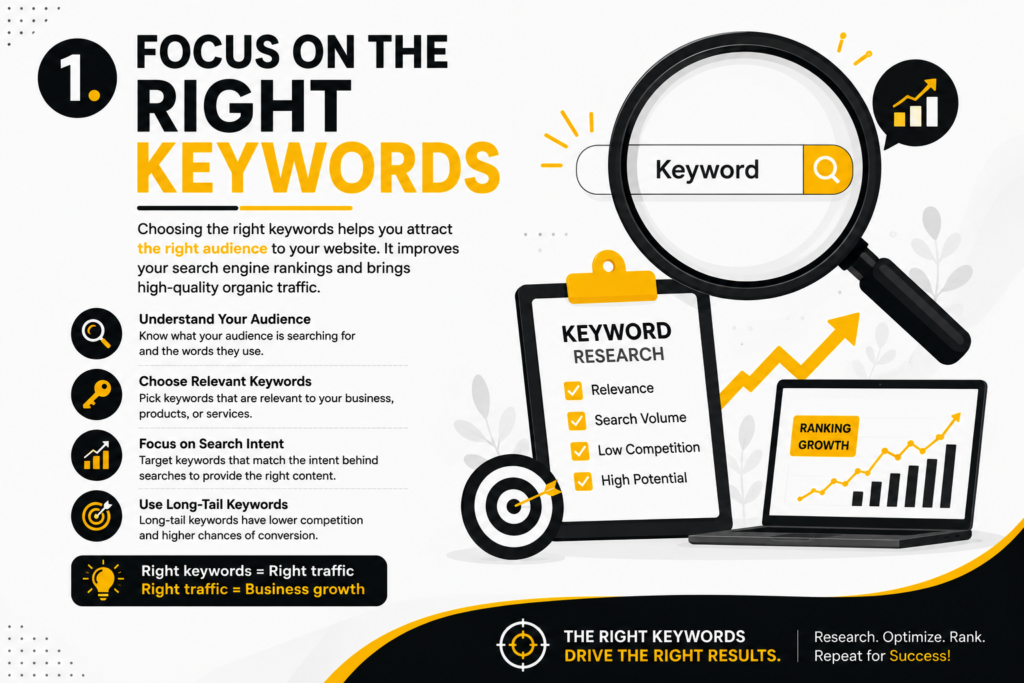
Keyword research is one of the first steps toward increasing organic traffic. Keywords are the terms people use when searching for information, products, or services online.
Instead of choosing keywords only because they have high search volume, look for terms that are relevant to your audience and business.
For example, a digital marketing agency could target keywords such as:
- Digital marketing services
- SEO services for small businesses
- Social media marketing tips
- How to improve Google rankings
- Website traffic strategies
Long-tail keywords can also be useful because they are more specific and often attract visitors with a clear search intention.
2. Create High-Quality Content
Content plays a major role in attracting organic visitors. Search engines prefer useful content that provides real value to readers.
Instead of creating articles simply to include keywords, focus on answering your audience’s questions and solving their problems.
A strong blog post should be:
- Informative
- Original
- Easy to read
- Well-structured
- Relevant to the target audience
- Updated when necessary
You can create different types of content, including guides, tutorials, comparisons, case studies, checklists, and industry insights.
The goal is simple: create content that people actually want to read and share.
3. Optimize Your Page Titles
Your page title is one of the first things users see in search results. A clear and attractive title can encourage more people to click on your page.
For example, instead of using a generic title like:
Website Traffic
you could use:
10 Proven Ways to Improve Website Traffic Organically
A good title should clearly communicate what the page is about while naturally including the primary keyword.
Avoid stuffing multiple keywords into the title. Keep it readable and appealing to users.
4. Write Better Meta Descriptions
A meta description gives search users a short preview of your webpage. Although it is not the main ranking factor, an effective description can encourage clicks.
A good meta description should briefly explain what readers will learn from the page.
For example:
Learn practical SEO and content marketing strategies to increase website traffic organically and attract more potential customers.
Make your descriptions useful, relevant, and naturally written.
5. Improve On-Page SEO
On-page SEO involves optimizing elements within your website to make your pages easier for search engines and visitors to understand.
Important areas include:
- Page titles
- Headings
- URLs
- Keywords
- Internal links
- Image descriptions
- Content structure
- Meta descriptions
Use your main keyword naturally throughout the content. Avoid repeating it excessively because keyword stuffing can make your content difficult to read.
6. Use Internal Linking
Internal links help visitors move from one page of your website to another related page within the same site.
For example, if you have an article about SEO basics, you can link to another article about keyword research or technical SEO.
Internal linking can help visitors discover more useful content while allowing search engines to understand the relationship between different pages.
A strong internal linking strategy can also help distribute authority across your website.
7. Improve Website Loading Speed
Nobody enjoys waiting for a slow website. If your website loads slowly, visitors may leave before they have a chance to explore your content.
To improve website performance, you can:
- Compress large images
- Remove unnecessary plugins
- Reduce unused scripts
- Use browser caching
- Choose reliable hosting
- Optimize website code
A faster website creates a better user experience and can support your overall SEO performance.
8. Make Your Website Mobile-Friendly
A large number of internet users browse websites using smartphones. Therefore, your website should work smoothly across mobile devices, tablets, and desktops.
Check whether:
- Text is easy to read
- Buttons are easy to tap
- Images fit the screen
- Menus work properly
- Pages load quickly
- Forms are simple to complete
A responsive website provides a better experience and makes it easier for mobile visitors to interact with your content.
9. Build Quality Backlinks
Backlinks are links from other websites pointing to your website. When trustworthy websites link to your content, they can help increase your site’s credibility and authority.
However, quality matters more than quantity.
You can earn backlinks by:
- Publishing original research
- Creating useful guides
- Writing guest articles
- Producing shareable resources
- Building industry relationships
- Creating informative infographics
Avoid purchasing low-quality links or using manipulative link-building methods. Focus on earning links naturally through valuable content.
10. Update Old Content
Creating new articles is useful, but updating existing content can also bring excellent results.
Some older articles may lose traffic because the information becomes outdated. Review your existing posts regularly and improve them with:
- Updated statistics
- New examples
- Better explanations
- Freshkeywords
- Additional sections
- New internal links
Youcan also improve outdated titles and introductions to make them more relevant to current search intent.
11. Understand Search Intent
Search intent is the reason behind a user’s search.
Someone searching for “what is SEO?” is probably looking for an explanation. Someone searching for “best SEO tools” may be comparing options.
Understanding this difference helps you create content that matches what users actually want.
Common types of search intent include:
- Informational
- Navigational
- Commercial
- Transactional
Before creating an article, think about what the user expects to find when they search for your target keyword.
12. Use Social Media to Promote Content
Social media may not directly replace SEO, but it can help your content reach more people.
Share your blog posts on platforms where your audience spends time. You can turn one blog article into several pieces of social content.
For example, a blog about SEO can become:
- An Instagram carousel
- A LinkedIn post
- A short video
- A Facebook post
- A visual infographic
Social promotion can increase content visibility and potentially attract referral traffic, shares, and backlinks.
13. Optimize Images
Images can improve the appearance and readability of your website, but large image files can slow down your pages.
Before uploading images, compress them and use suitable file formats.
Also, give images descriptive file names and useful alternative text where appropriate. This helps search engines and users understand the purpose of the image.
For example, instead of:
IMG12345.jpg
use:
organic-website-traffic-strategies.jpg
14. Create Topic Clusters
A topic cluster is a content strategy where several related articles support one main topic.
For example, a website focusing on digital marketing could have a main article about Digital Marketing, supported by articles about:
- SEO
- Content Marketing
- Social Media Marketing
- Email Marketing
- Google Ads
- Meta Ads
- Keyword Research
Linking these related pages together creates a stronger content structure and helps visitors explore your website more easily.
15. Improve User Experience
Getting visitors to your website is only part of the process. You also want them to stay, explore, and take action.
Make your website simple and comfortable to use.
Use:
- Clear navigation
- Short paragraphs
- Descriptive headings
- Readable fonts
- Relevant images
- Strong calls to action
- Plenty of white space
A positive user experience can encourage visitors to view more pages and spend more time engaging with your content.
16. Target Local Searches
If you operate a local business, local SEO can be an excellent way to attract relevant visitors.
Create content that targets your service area and optimize your online business presence.
For example, instead of targeting only:
Digital marketing services
you could target:
Digital marketing services in Malappuram
Local keywords can help businesses reach people who are specifically searching for services in their area.
17. Use Analytics to Measure Results
You cannot improve your organic traffic effectively without understanding your current performance.
Track important metrics such as:
- Organic visitors
- Top-performing pages
- Search queries
- Click-through rate
- Average engagement
- Conversions
- Traffic sources
Analytics can show which pages are performing well and which ones need improvement.
If one article attracts many visitors but generates few conversions, you can improve its calls to action or add relevant service information.
18. Be Consistent
Organic growth requires patience. Publishing one article and expecting immediate results is unrealistic.
Create a realistic content schedule and follow it consistently.
For example, you could publish:
- One detailed blog every week
- Two short social media posts each week
- One content update every month
Consistency gives your website more opportunities to appear for relevant searches and build authority over time.
Common Mistakes to Avoid
While working to increase organic traffic, avoid these common mistakes:
Keyword stuffing: Repeating keywords unnecessarily can make your content unnatural.
Low-quality content: Publishing large amounts of thin or unhelpful content will not create sustainable growth.
Ignoring mobile users: A website that works poorly on smartphones can lose valuable visitors.
Buying backlinks: Low-quality or unnatural backlinks can create SEO problems.
Ignoring technical issues: Broken links, slow pages, indexing problems, and poor website structure can limit organic performance.
Not updating content: Older articles can lose relevance when information changes.
Conclusion
Improving website traffic organically is a long-term strategy rather than a quick marketing trick. The strongest results come from combining useful content, effective SEO, technical improvements, quality backlinks, social promotion, and a positive user experience.
Start by understanding your audience and researching the keywords they use. Then create valuable content that answers their questions. Optimize your pages, improve website speed, build relevant internal links, earn quality backlinks, and regularly update older content.
Most importantly, measure your results and continue improving. With consistent effort and a user-focused SEO strategy, your website can attract more relevant visitors, build stronger online visibility, and create sustainable growth without depending entirely on paid advertising.